

Part Three: The Camino under Covid-19: crossing over the border
- by Miranda Gavin
- in camino Camino de Santiago Camino del Norte Coronavirus Covid-19 Creative global pandemic Miranda Gavin mother nature nomad photography pilgrimage The Way of Saint James travel visual art walking writing
- posted August 8, 2020
 Where were we? Freud or Jung? Personally, there are aspects of Freud’s writing that I find remarkably insightful and written with clarity. However, given an either or scenario and my toddler experience, I have always leaned more towards Jung, not least for his erudite writing on mythology, the collective unconscious and archetypes (mostly accompanied by copious footnotes,) but also for his use of mandalas and drawing as a way of accessing and orientating the unconscious. If only the psychiatrist at the Tavistock Centre had handed me a piece of paper on which to make my mark.

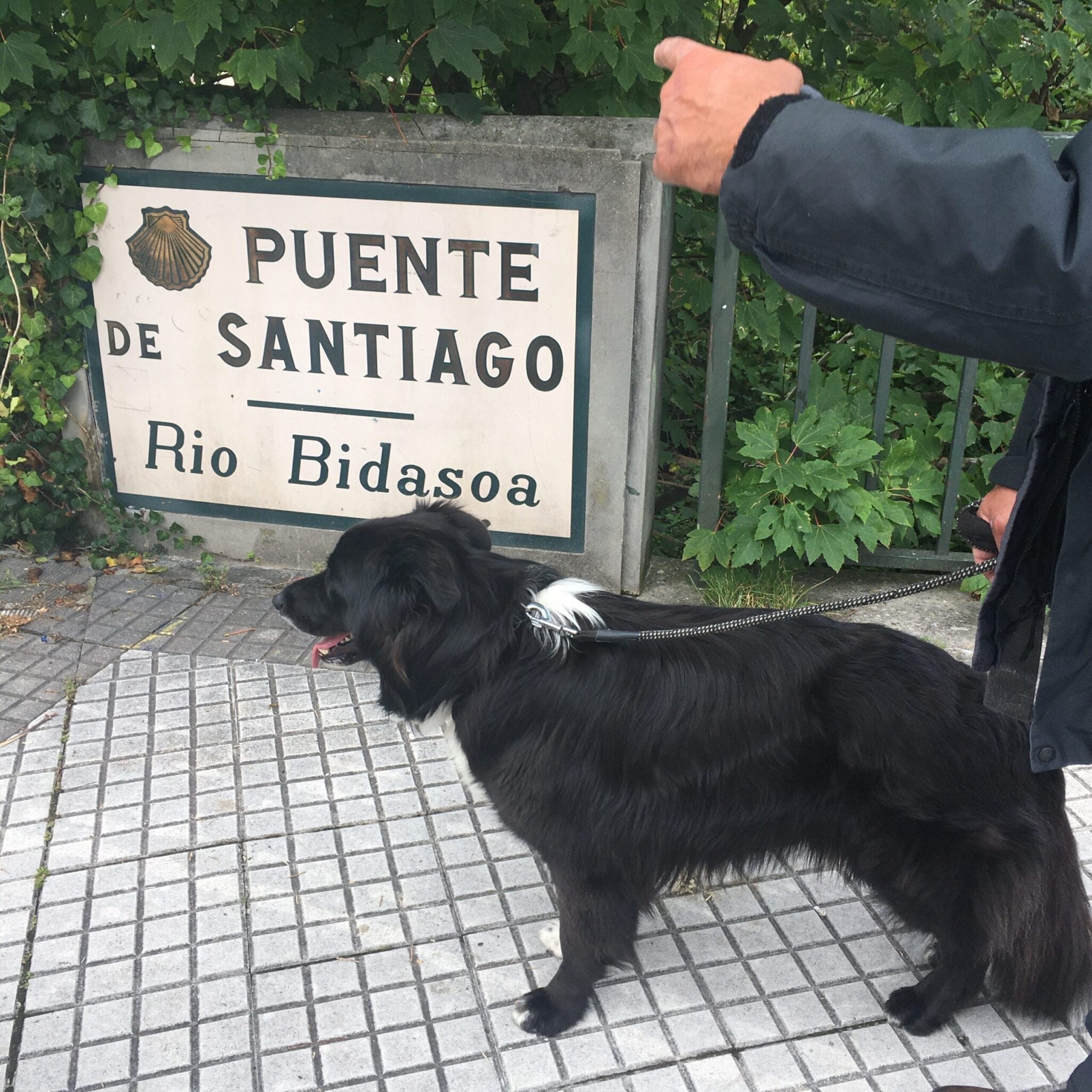
Back to the Camino under Covid-19 and its pandemic context. The official start of the Camino del Norte is in Irun, a border town in the Basque country of Spain, and to reach it from Hendaye in France, we had to cross a small bridge separating France and Spain–on one side of the river the sign is in French while on the other it is in Spanish.

Arriving in Irun, we found a park bench and took a break. While filling my water bottle at one of the fountains located in every village, town and city throughout the region, I watched the local drug dealers. This turned out to be a humorous spectator sport. The groups of two or three men hanging around the park were scattered on the perimeter, occasionally dispersing to ask passersby: ‘Voulez-vous un truc?’ (Do you want something?)
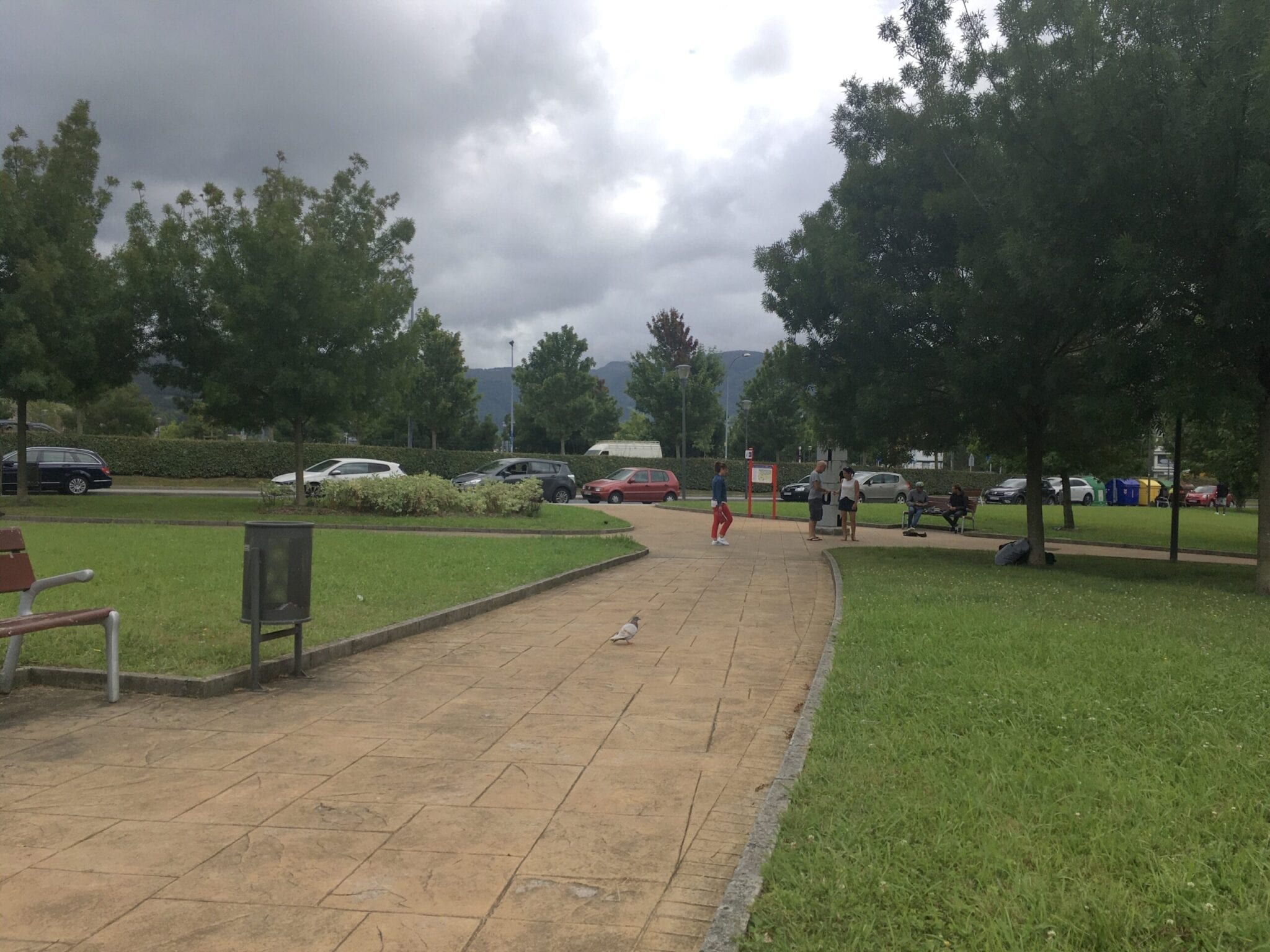
Later, I watched one man survey a patch of the lawn and then start digging. This went on for over half an hour until I realised that he was looking for his stash, but couldn’t remember where he had hidden it. Then Squirrel Man gave up and returned to his park bench, located near the main road from the bridge. Irun is a liminal space and it shares many of the features of other border towns I’ve travelled through. Namely, it’s a departure point for the Northern Way to Santiago (Camino del Norte) as well as the first port of call for French and Camino nicotine addicts who can buy a packet of twenty cigarettes, or a pouch of rolling tobacco (30g) for about 5 Euros.

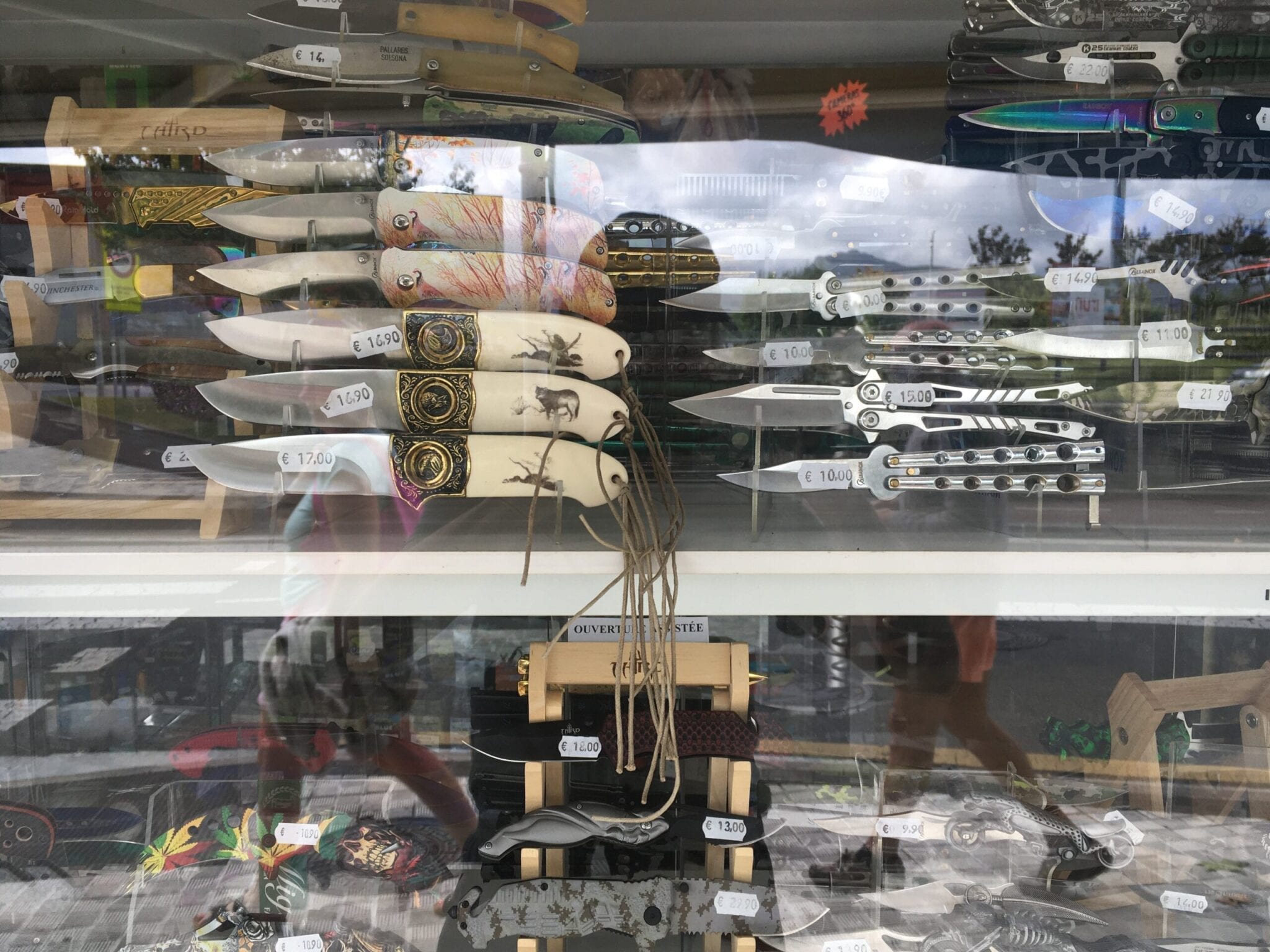
Secondly, it sells cheap booze and an alarming array of knives of all shapes and sizes. Drugs and knives, side by side, could signal trouble, yet the atmosphere in the park was not threatening–squiggly around the edges, yes, but dangerous, not really. In fact, it felt as if I’d walked onto the set of a Tarantino movie.

Although I’m getting used to eating baguettes on a park bench and learning to take it slowly, I’m still clumsy when it comes to using sharp instruments and I managed to cut my finger slicing a beef tomato using a supposedly childproof, Opinel, camping knife. Fortunately, I didn’t need stitches. Visually, however, the tomato juice mixed with the blood from my index finger created a shade of red that I can only describe as bloody Mary (sans vodka). Three hours later, we were on the road once again. At this point, I need to acknowledge my travelling companion who I will now refer to as Mr X and his Shollie (German shepherd cross with Border Collie), simply as Dog.  I am aware that this is my story and I don’t want to co-opt someone else’s troubled life and Camino path for the pleasure of those who live vicariously when it comes to reading the difficulties in other people’s lives. I’ve always felt this, especially when it comes to addiction. There are so many people who devour celebrity addiction, many of whom profit from it, at a distance. When it’s up close and personal, the same people often make judgments that are inconsistent with their apparently, socially conscious views. The acronym NIMBY comes to mind, Not In My Back Yard.


Many of these well-meaning people rush to help the homeless, the alcoholics, the ex-offenders, the drug addicts, only as long as it’s not too close to home. Nick Hornby (Fever Pitch, High Fidelity) wrote a book, How to be Good, which I recommend.
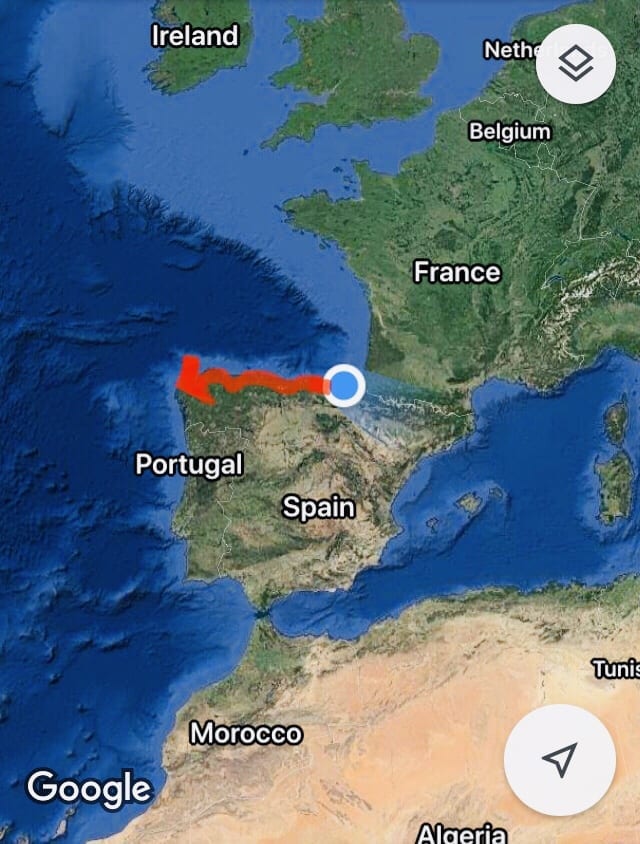
I digress. Indeed, one of the joys and frustrations of walking the Camino is that one often takes the wrong path, follows mis-painted and misplaced signs and then has to do a U-turn. This experience has been made even more so by the Covid-19 climate. Any romantic notions I may have had of joining The Way have rapidly dissolved into confusion.
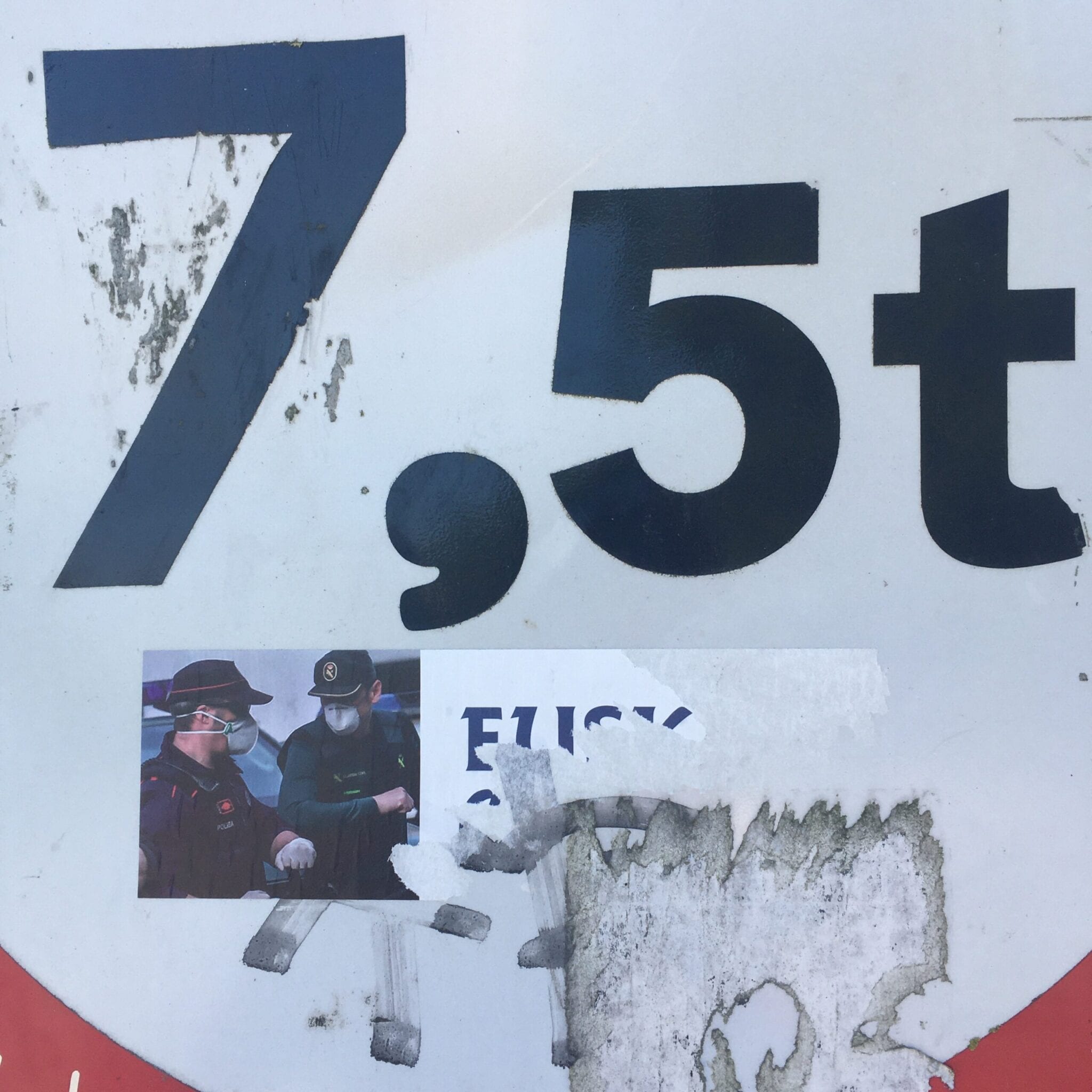
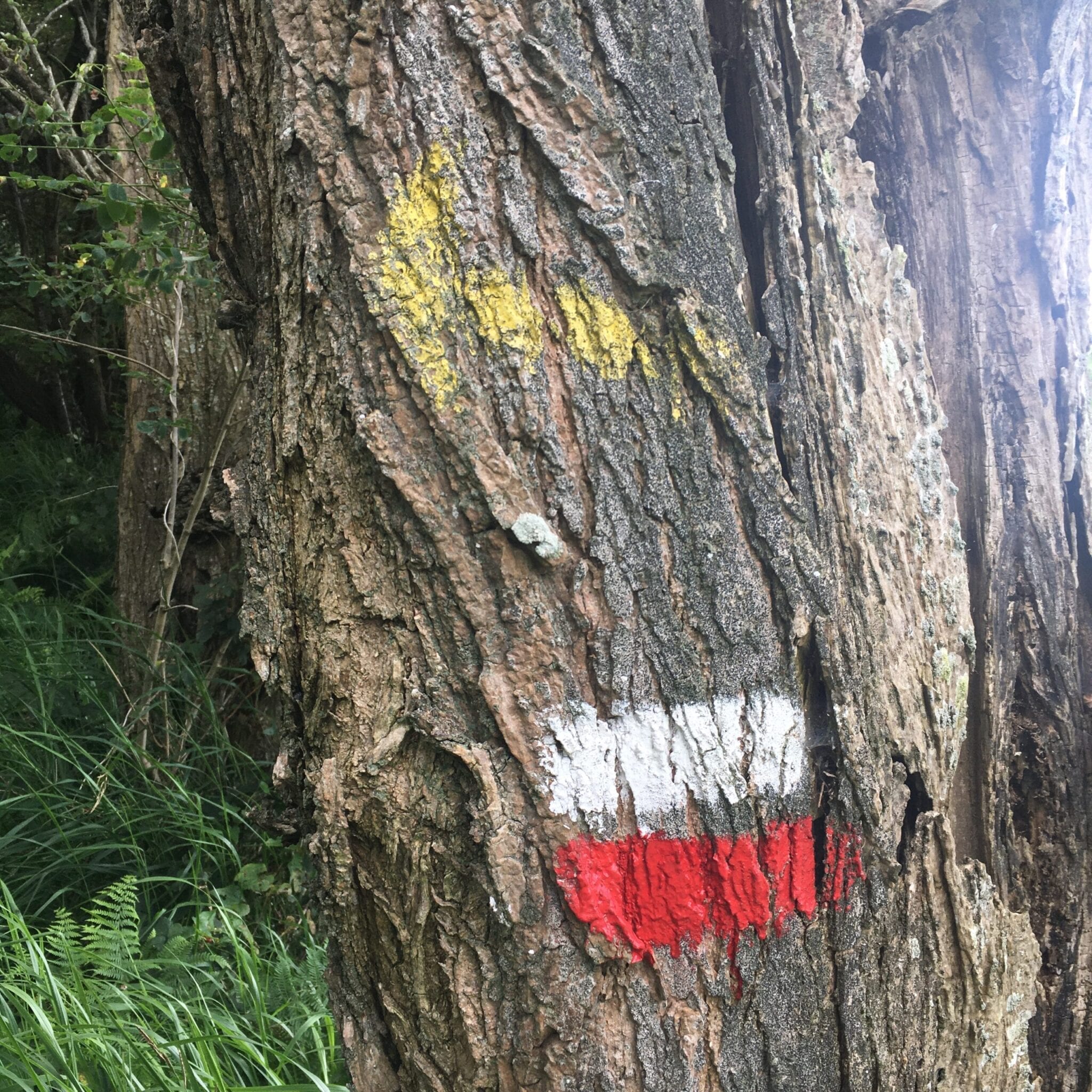
No one in our globally connected, but at the same time disconnected, world can be shielded from the uncertainty that pervades every aspect of life. There is no escape. Certainly, I have the skies above and the earth below but so much has been, and still is, affected by Covid-19. The Camino has a history that reaches back centuries and The Way of Saint James, or Saint Jacques, is well trodden and recorded. I will write more about its origins and significance in my next post, but today, I want to remember it as a path of penance. Do wrong and repent, then do penance by walking the Camino. According to Wikipedia:
“The Church employed a system of rituals, known as penance, to atone for temporal punishment due to sins. According to this system, pilgrimages were a suitable form of expiation for some temporal punishment, and they could be used as acts of penance for those who were guilty of certain crimes. As noted in the Catholic Encyclopedia.
‘In the registers of the Inquisition at Carcassone…we find the four following places noted as being the centres of the greater pilgrimages to be imposed as penances for the graver crimes: the tomb of the Apostles at Rome, the shrine of St. James at Compostella [sic], St. Thomas’ body at Canterbury, and the relics of the Three Kings at Cologne.’
“There is still a tradition in Flanders of pardoning and releasing one prisoner every year under the condition that, accompanied by a guard, the prisoner walks to Santiago wearing a heavy backpack.”
There we go. I’m intent on finding out more about this tradition and believe that this notion, regardless of whether someone is religious or not, drives some people’s desire to walk The Way of Saint James. My companion is a self-confessed example. His rucksack weighs 35kg, he has walked from Brussels in Belgium, through France, until lockdown in Irun. It is a distance of around 2,800kms and he walks with a dog. This makes walking the Camino arduous and requires great endurance, or a heavy heart that is looking for respite. The municipal pilgrim hostels do not take pets, many of the priests in villages they walked through refused to give them safe shelter, and regarded Dog as dirty, so much for the hymn we used to sing, ‘all things bright and beautiful, all creatures great and small’. Even the Red Cross in France wouldn’t take them in during the confinement. But that’s his-story and not mine, yet. 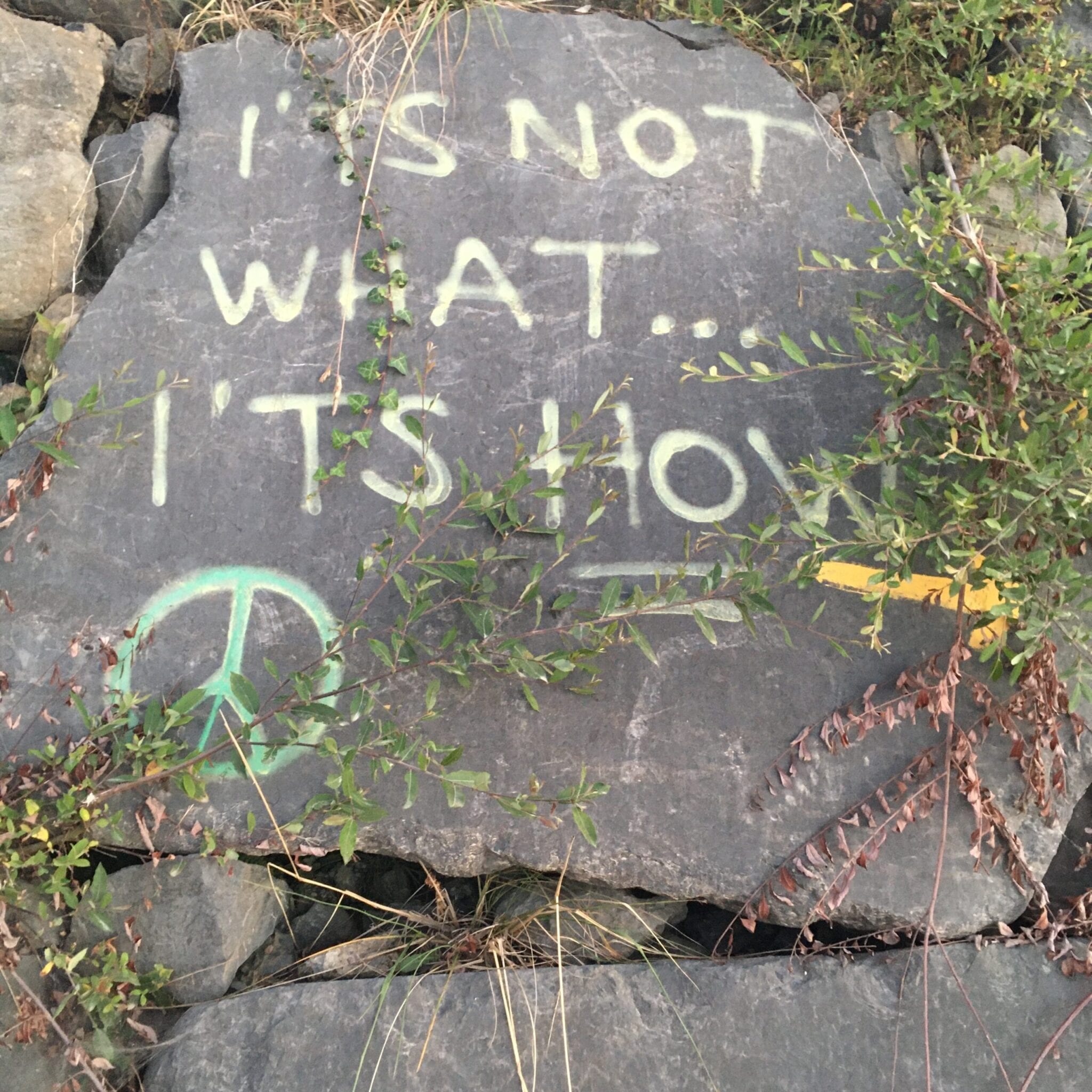
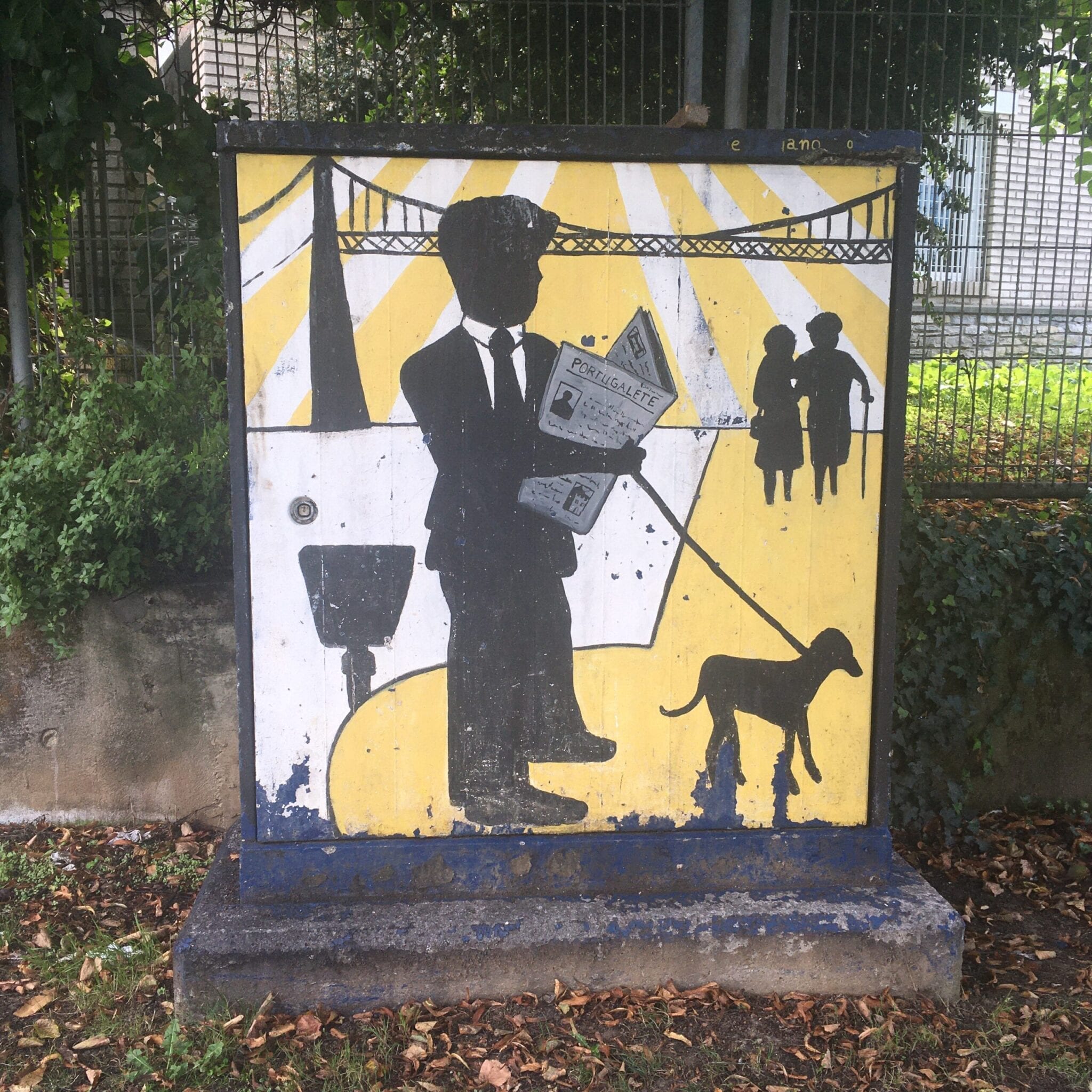
All photos copyright Miranda Gavin, 2020. Illustration detail taken from a mural in Bilbao.
Comments
helen marshall
August 9, 2020 at 9:53 pmmuch love – so glad you are safe. Helen x
Christian
August 30, 2020 at 12:27 pmhttps://www.youtube.com/watch?v=SbyAZQ45uww xx
Miranda Gavin
September 1, 2020 at 6:32 pmI just started shakin while I was a walkin. Love it. X