


Walk it Like you Talk it: the joy of walking
- by Miranda Gavin
- in Creative Miranda Gavin movement nature travel walking writing
- posted October 23, 2019
Above all, do not lose your desire to walk. Every day I walk myself into a state of well-being and walk away from every illness. I have walked myself into my best thoughts, and I know of no thought so burdensome that one cannot walk away from it. But by sitting still, and the more one sits still, the closer one comes to feeling ill. Thus if one just keeps walking, everything will be all right.
Soren Kierkegaard, letter to Jette 1847

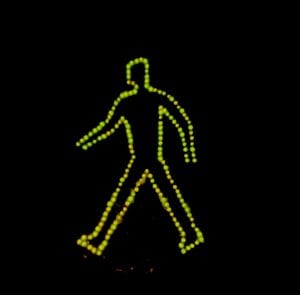
Signs in Australia, photo Miranda Gavin, 2018
I have always walked. From as long as I can remember I’ve wanted to be mobile—something that I’ve been reminded of by my mum. Indeed I was once referred to as a Pink Sherman Tank on account of the day I rolled across a bed, straight over another, immobile baby.

My sketchbook in Finland, walking the stone circle, 2019
Nomadic lifestyles have always fascinated me and I regard walking as a way of life. The Road, The Way, The Path, The Pilgrimage and The Pavement offer opportunities to experience life as a ‘ped’, not a ‘pod’. Thanks to author and psychogeographer, Ian Sinclair for this apt distinction between those who travel on foot and those who travel by car. In Dining on Stones (2004) he writes: “Sit at your PC as you sit in your car: pod person. Lose yourself in the rhythms of the walk: pedestrian, ped person.”


The Road, My Feet, Another Road Sign, photo Miranda Gavin, 2019
So too, Bruce Chatwin, whose book The Songlines (1987), placed importance on the vital role of walking in Aboriginal culture as well as in the construction of an Australian identity and its representation of place. In Footprints of the Ancestors, reviewer Andrew Harvey quotes Chatwin: “Aboriginal Creation myths tell of the legendary totemic beings who had wandered over the continent in the Dreamtime, singing out the name of everything that crossed their path – birds, animals, plants, rocks, waterholes – and so singing the world into existence. . . . Each totemic ancestor, while travelling through the country, was thought to have scattered a trail of words and musical notes along the line of his footprints . . . these Dreaming-tracks lay over the land as ‘ways’ of communication between the most far-flung tribes. . . . In theory, at least, the whole of Australia could be read as a musical score.”
This new BBC documentary, Nomad: In the Footsteps of Bruce Chatwin, by walker-wanderer and lifelong friend, filmmaker Werner Herzog is simply inspiring. “When Bruce Chatwin was dying of AIDS, his friend Werner Herzog made a final visit. As a parting gift, Chatwin gave him his rucksack. Thirty years later, Herzog sets out on his own journey, inspired by Chatwin’s passion for the nomadic life.”
Now where did I leave my boots?
Comments
Anne
July 31, 2020 at 6:07 pmSeriously thought provoking. – 3 weeks ago I said I was going to walk some of the way through Hampstead and onwards with Andre who walks with pleasure and discipline
Now, must do it
Miranda Gavin
August 16, 2020 at 11:16 amYes. Please do find the time when you have the energy. Love you x
Part Four: The Camino Under Covid-19: passport to roam – OUTSIDE HER ART
August 16, 2020 at 8:15 am[…] If you look carefully at my passport, you can see that one of the key questions asked is how you intend to travel the Camino: on foot, by bicycle (increasingly popular), by horse (increasingly unpopular), or by boat (I have no idea). As I don’t have a bicycle and I can’t find, let alone ride, a horse, my feet are my main form of transport. I am a ped, not a pod, as mentioned in one of my earlier posts, Walk it Like you Talk it: the Joy of Walking. […]